
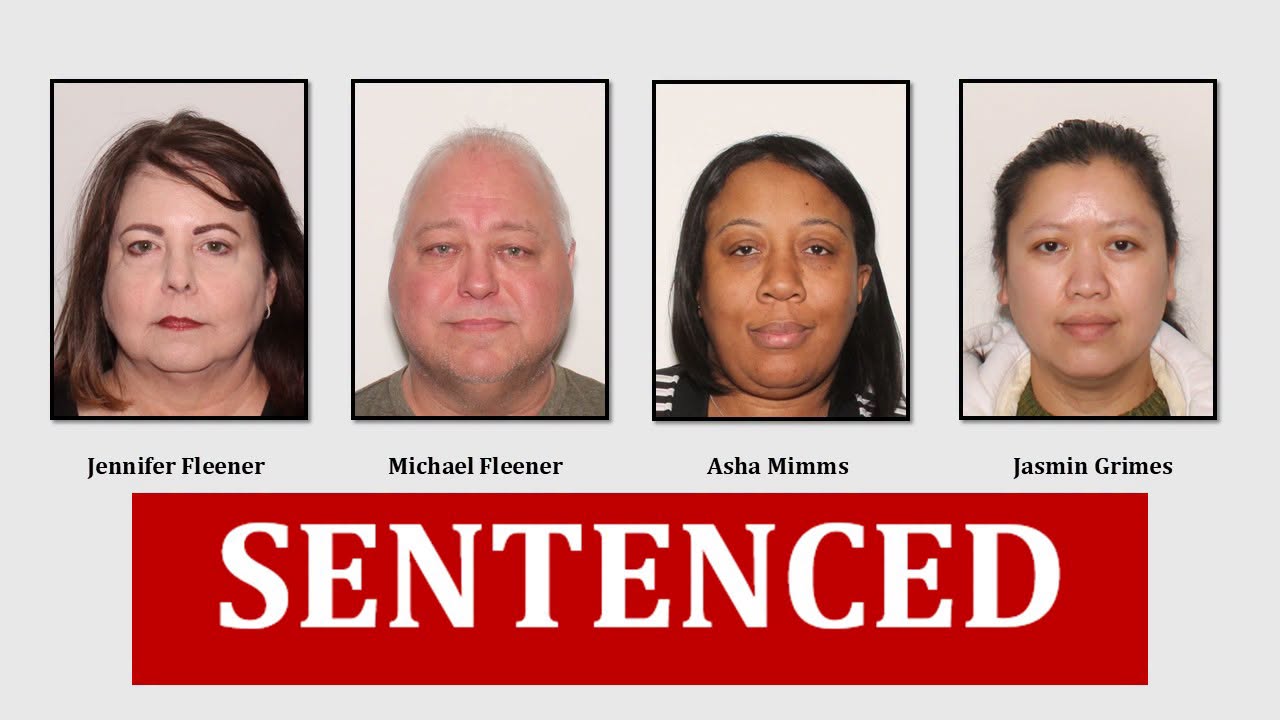
Today, we delve into a significant federal case involving eight individuals sentenced for their roles in a $1.2 million travel insurance fraud scheme. This complex conspiracy manipulated the claims process of a travel insurance company, exploiting internal positions and a network of participants to submit and approve fraudulent claims over several years.
Key Players and Sentences
- Jennifer Fleener, the mastermind and case-management supervisor at the insurer, received the longest sentence: 57 months in prison plus two years of supervised release, along with restitution exceeding $1.19 million.
- Her ex-husband, Mike Fleener, was sentenced to 48 months in prison with supervised release and restitution over $1.18 million.
- Other participants include employees, associates, and relatives who received sentences ranging from probation to a year in prison, with varying amounts of restitution between roughly 42,000and788,000.
The Fraud Scheme
Beginning in 2016, Jennifer Fleener used her insider knowledge gained from working at “T.M.”, a company selling short-term travel medical insurance, to orchestrate a fraud scheme by submitting and approving false claims. T.M., based in Houston with a travel division in Indianapolis, insures travelers abroad.
Mike Fleener recruited mostly Philippine residents, including Jasmin Aldava Grimes, who purchased policies under false pretenses—claiming travel without intent to actually travel. When fraudulent claims were paid, proceeds were split among conspirators, with Mike passing a share to Jennifer. Grimes also recruited additional participants, expanding the network.
By 2019, Jennifer Fleener further extended the conspiracy by involving fellow T.M. employees, their families, and others. This included an internal auditor, Asha Mimms, who brought in her daughter, Dasha Pearson, and associate Amber McDaniel, as well as former employee Jennifer Thompson. These recruits bought policies and filed falsified claims, which Jennifer approved — a direct abuse of her claims handler authority to bypass oversight.
Claim payout checks were mailed directly to claimants, who then distributed shares back up the chain, fueling the scheme’s financial success.
Educate yourself by becoming ScamProof with our guide Wise to the Con
Additional Complicity and Legal Actions
Christopher Perdue, husband of Fleener’s niece, provided his personal information to obtain fraudulent policies and claims. He pled guilty not only to conspiracy but also to making false statements before a federal grand jury, having lied during FBI interviews and under oath.
Altogether, the scheme involved 441 fraudulent claims, resulting in losses of about $1.2 million to the insurance company.
Legal and Investigative Perspectives
Tom Wheeler, U.S. Attorney for the Southern District of Indiana, emphasized that such fraud erodes trust in protective insurance programs and imposes serious financial harm on companies and consumers. He affirmed their commitment to prosecuting coordinated, long-running fraud.
FBI Indianapolis Special Agent in Charge Timothy J. O’Malley highlighted the calculated deception and abuse of trust inherent in complex frauds, underscoring the FBI’s ongoing dedication to uncovering fraud and pursuing those responsible.
The case was thoroughly investigated by the FBI Indianapolis and prosecuted by Assistant U.S. Attorneys Bradley P. Shepard and Meredith Wood. Sentences were handed down by U.S. District Judge Richard L. Young.
This case exemplifies how internal knowledge and personal networks can be exploited to facilitate extensive insurance fraud. It also underscores the importance of vigilant oversight, interagency cooperation, and robust legal action to uphold trust and financial integrity in insurance systems.
As this enforcement approach continues, it sends a clear message: fraud schemes that abuse systems and betray trust will face serious consequences under the law. Listeners should consider this not only a cautionary tale but also an insight into the complexities and scale of modern insurance fraud investigations.